Videoletters, where are we? A tally
published InterMed - MediaEducation - 10 years No 1 April 2005
Almost ten years ago, while I was looking for ideas on how to improve the short paths through the introduction of audiovisual language that was driving with Massimo Rossi Peter Kick Institute of Padua, I happened to read an interesting manual , written by two New York media educator (1), a chapter devoted to videoletters.
Maybe because in my practice I had found a manufacturer to make videos that correspond to the various communication needs, perhaps for a little reminiscent of the ideas of Jean Cloutier (2) that my lack of familiarity with the French had allowed me to his time to learn, I had been immediately clear the potential of the video letter may have as a tool comunicazionein schools.
It is clear that an audiovisual product through a school group (usually a class) can exchange with one or more groups better partner, and especially of languages \u200b\u200band cultures, about their living environment, their smoking habit and aspirations , cultural environment, much more effective than through an exchange of e-mail. It is also clear that the path of production of a video letter creates a powerful synergy between the objectives of the group communicate with partners and to acquire skills and abilities in creating and decoding of audiovisual messages.
In 1998, with the collaboration of Education in the City of Padua, I was able to achieve for the 5 classes of paths introduction to the use of audiovisual language centered on the creation of a video letter, and in October of 2002, having in the meantime carry out any other experience like this, I put the site on the net www.videoletter.org, where I try to encourage teachers to undertake this kind of experience, outlining the key features and (in the "make a video letter") the possible ways of realization.
In a nutshell, if you do not have time to go see the site, say that a structure particularly functional for a video letter is probably that of the container program in which one or more contributions to this announcement and have a duration of two to four minutes, each designed, filmed and edited by a group of 3 / 5 students.
Here, instead, I try to think about the difficulties they encounter this kind of experience and possible strategies to overcome them.
must not encouraging from a given: if today we make a Google search using as keywords videoletter school and there are 46 listed sites from which, after a screening accurate enough, we get news of no more than 4 or 5 actually made videoletters in schools since 1998. Few, if pensa che ai vari concorsi di video per le scuole che ci sono in Italia arrivano ogni anno diverse centinaia di prodotti.
Ripetendo la ricerca con i termini inglesi, il risultato non è più confortante, anche se si ricava l’impressione (non verificabile per chi, come me, non conosce quelle lingue) che nei Paesi dell’estremo oriente questo mezzo di comunicazione sia più utilizzato.
La domanda che mi pongo è quindi: come mai uno strumento così potente e “bello” come la videolettera non viene adeguatamente sfruttato?
Vi sono senz’altro delle difficoltà di tipo organizzativo, dovute al fatto che una videolettera, per poter rappresentare effettivamente l’inizio di un rapporto communication between two classes, must be prepared and submitted to partners at the latest by March, so that all phases (approval and funding of the project on the one hand, and research and agreement with partners on the other) must be completed by December.
thing as we know it is not always easy, especially when you depend on funding from sources outside the school (and that although it is not difficult to understand to the local value of this kind of initiative). Much simpler, however, is to communicate through videoletters classes as part of a collaborative project already started, or when there is already involved in the schools production practices audiovisuals. Another difficulty with
challenges facing those who lead the path of production of the video letter - he is a teacher with some experience in the production of audiovisual or an outside expert - is the lack of appropriate role models.
None of audiovisual products that are normally used to consider the producers are turning directly to the public to speak for themselves. In addition, none of the "normal" audio-visual products to the relationship between producer and consumer is interchangeable and equal. For comparison, we could say that is the video letter to the other audiovisual products as a call to action is an assembly in front of microphones, or as a letter is a book: records of communication are clearly different.
While most of audiovisual productions, including at school, the "actors" are asked to represent something, and at the same time to adapt to the prevailing communication patterns for that particular medium at that particular historical moment, the guys in the video letter should simply present the their partners as they are.
The thing is not easy, at both the decision and writing the content to be communicated, both during recording, as it is very difficult to get rid of the models daily absorbed through the TV when we write a lineup or even to choose the best shot - however necessary steps to ensure the adequacy and clarity of the message.
until such time as it will be appropriate to a settled practice communication audiovisual communication "as equals" (which can hardly be designed at a table, but more likely will follow the practice), an effective solution would be to consciously practice two levels of communication, stating explicitly the partners: "We send you this movie we made for you" even while turning to the "film" (which is the documentary about the school or district, the city's history or sports played on the boys do not care) its back-stage.
do not believe however that can be attributed to the lack of optimum models that, as much experience, we are almost a year of zero videoletters and I think that, in addition to organizational difficulties I mentioned earlier, the responsibility is more likely to attributed to the low level audio-visual literacy of the school (not only Italian) and the lack of a popular series, so it just happens that a few people is now planning to use video as a medium of communication between classes.
I also believe, however, that the inevitable spread of the personal audio-visual communication (handsets, webcam, management and exchange of movies via computer) will still lead the school to the use of audiovisual media in exchange programs with schools in other countries and localities.
It is desirable that the community media educators participate actively in this process by providing and, above all, testing models and production processes for the videoletters in order to ripen quickly what appears to be an excellent tool to develop knowledge and friendship between young people of different cultures and different conditions.
(1) BETSY NEWMAN, JOSEPH MARA, Reading, Writing & TV: A Video
Handbook for Teachers, Highsmith Co., November 1995.
(2) Cloutier Jean, the ages of Emerec ou la communication audio-scriptovisuelle
à l'heure des self media, Les Presses de l'Université de Montreal, 1975
Wednesday, December 5, 2007
Saturday, June 30, 2007
Psoriasis Palmoplantar Pustular
"manual" for the "Live TV" at school
Communication between the various members a team of recovery is the key element of live television.
The Tally is the device that turns on the red light on the camera, whose purpose is to warn all those who are on the set, especially the actors and the cameraman, that the car is "on air". Some mixers
end economic not have this basic function, but it can be realized with a efacile extremely economical device to be built for those who have a minimum of manual work.
The metal finger A placed in one of four possible positions causes the corresponding RCA B is a voltage of 3 volts supplied by two batteries. The LED's high brightness C are mounted on a female RCA jack.
Led C be fixed on the camera (eg with a piece of Velcro) is connected to the B with a standard coaxial cable. You can use a double cable that leads from one part of the video signal and the other the tally.
Obviously it is up to the mixer dell'addetto or his helper to place the finger A wave at the camera.
(The prototype of the photo was made by me in 1998, according to my original idea was never patented)
Communication between the various members a team of recovery is the key element of live television.
The Tally is the device that turns on the red light on the camera, whose purpose is to warn all those who are on the set, especially the actors and the cameraman, that the car is "on air". Some mixers
end economic not have this basic function, but it can be realized with a efacile extremely economical device to be built for those who have a minimum of manual work.
The metal finger A placed in one of four possible positions causes the corresponding RCA B is a voltage of 3 volts supplied by two batteries. The LED's high brightness C are mounted on a female RCA jack.
Led C be fixed on the camera (eg with a piece of Velcro) is connected to the B with a standard coaxial cable. You can use a double cable that leads from one part of the video signal and the other the tally.
Obviously it is up to the mixer dell'addetto or his helper to place the finger A wave at the camera.
(The prototype of the photo was made by me in 1998, according to my original idea was never patented)
Monday, June 25, 2007
Best Way To Get Dog Hair Off Of North Face
The video of the play, a chance to do "live TV" on school project in Mozambique
For what I do I often, usually in June, as This year, to find myself behind a camera or a video mixer to record a school play. I am so doing to myself, always the same considerations. This time, thanks to the powerful capabilities of the network :-) I try to share them. How I used to try to be brief, even because the blog gives us the opportunity to deepen. In general, all
(actors, teachers, parents ...) are interested in the result and look forward the tape, or a couple of years, the DVD, but almost nobody ever realized that the registration in itself may represent an excellent opportunity to "School TV", as educational, for children who participate , than it is the play for the actors.
I'm talking about, so to speak, a team record "school" that uses the technique of "Direct TV" engaging three cameramen, three assistants, a clerk at the audio mixer, one at video mixer, a director and an assistant director.
commitment, concentration, the level of cooperation of an activity like this are comparable to a volleyball game.
The reference to volleyball is not accidental, because in many ways the second half with the technique of "Direct TV" (more cameras connected to a mixer) is the shot with a camera as a game of volleyball is the free-body exercises .
It 's a job, I speak from personal experience, that boys third top with a minimum of training are easily able to play. (Even in fifth grade children are able to handle a simple video director, but in this case is
difficult to think they can maintain the necessary concentration for the duration of a show)
E 'is also clear that there is a job that can be improvised, there are a variety of techniques and tricks you need to know and you can learn only by direct experience, but I am convinced that motivated teachers, who already have already picked up a camera, they can learn everything you need in a course of ten to fifteen hours. (Subject, however, I devoted a chapter of the handbook "Making audiovisual School)
obviously need some basic equipment. The core of the mixer video, a car che oggigiorno costa dagli 800 euro in su. Servono poi almeno tre videocamere con stativo, che però in una maniera o nell'altra si possono recuperare, un paio di televisori e mixer audio e microfoni, che in genere a scuola ci sono, e qualcosa per registrare il programma, che può essere un VHS o un computer dotato di scheda di acquisizione video/analogica.
"... si... interessante e simpatico..." starete pensando in questo momento, "...ma perchè mai la scuola dovrebbe prendersi l'onere economico e organizzativo di fare una cosa del genere?"
La risposta è semplice: ormai la trasmissione culturale passa in buona parte attraverso l'audiovisivo.
La scuola semplicemente non può più permettersi di ignorare questa categoria di linguaggi o di trattarli come un oggetto di studio teorico, dal momento che ormai quasi tutti, nella nostra società, siamo potenziali produttori di messaggi audiovisivi .
E praticare un linguaggio è certo il modo migliore, se non l'unico, in realtà, per appropriarsene.
La ripresa dello spettacolo teatrale è stata una delle esperienze fondanti per la cultura televisiva ( basti pensare alle commedie di Eduardo, Govi e Baseggio mandate in onda dalla RAI a partire dall'inizio delle trasmissioni, nel 1954 ) in quanto ha permesso di trasferire nel nuovo linguaggio tutta l'esperienza di almeno 500 anni di tradizione teatrale.
Per questo, secondo me, it is worth repeating the same route to school.
For what I do I often, usually in June, as This year, to find myself behind a camera or a video mixer to record a school play. I am so doing to myself, always the same considerations. This time, thanks to the powerful capabilities of the network :-) I try to share them. How I used to try to be brief, even because the blog gives us the opportunity to deepen. In general, all
(actors, teachers, parents ...) are interested in the result and look forward the tape, or a couple of years, the DVD, but almost nobody ever realized that the registration in itself may represent an excellent opportunity to "School TV", as educational, for children who participate , than it is the play for the actors.
I'm talking about, so to speak, a team record "school" that uses the technique of "Direct TV" engaging three cameramen, three assistants, a clerk at the audio mixer, one at video mixer, a director and an assistant director.
commitment, concentration, the level of cooperation of an activity like this are comparable to a volleyball game.
The reference to volleyball is not accidental, because in many ways the second half with the technique of "Direct TV" (more cameras connected to a mixer) is the shot with a camera as a game of volleyball is the free-body exercises .
It 's a job, I speak from personal experience, that boys third top with a minimum of training are easily able to play. (Even in fifth grade children are able to handle a simple video director, but in this case is
difficult to think they can maintain the necessary concentration for the duration of a show)
E 'is also clear that there is a job that can be improvised, there are a variety of techniques and tricks you need to know and you can learn only by direct experience, but I am convinced that motivated teachers, who already have already picked up a camera, they can learn everything you need in a course of ten to fifteen hours. (Subject, however, I devoted a chapter of the handbook "Making audiovisual School)
obviously need some basic equipment. The core of the mixer video, a car che oggigiorno costa dagli 800 euro in su. Servono poi almeno tre videocamere con stativo, che però in una maniera o nell'altra si possono recuperare, un paio di televisori e mixer audio e microfoni, che in genere a scuola ci sono, e qualcosa per registrare il programma, che può essere un VHS o un computer dotato di scheda di acquisizione video/analogica.
"... si... interessante e simpatico..." starete pensando in questo momento, "...ma perchè mai la scuola dovrebbe prendersi l'onere economico e organizzativo di fare una cosa del genere?"
La risposta è semplice: ormai la trasmissione culturale passa in buona parte attraverso l'audiovisivo.
La scuola semplicemente non può più permettersi di ignorare questa categoria di linguaggi o di trattarli come un oggetto di studio teorico, dal momento che ormai quasi tutti, nella nostra società, siamo potenziali produttori di messaggi audiovisivi .
E praticare un linguaggio è certo il modo migliore, se non l'unico, in realtà, per appropriarsene.
La ripresa dello spettacolo teatrale è stata una delle esperienze fondanti per la cultura televisiva ( basti pensare alle commedie di Eduardo, Govi e Baseggio mandate in onda dalla RAI a partire dall'inizio delle trasmissioni, nel 1954 ) in quanto ha permesso di trasferire nel nuovo linguaggio tutta l'esperienza di almeno 500 anni di tradizione teatrale.
Per questo, secondo me, it is worth repeating the same route to school.
What Kind Of Weave Meagan Good Wear
this initiative point out that he committed the 'friend photographer Francesco Fantini : all together' Association organizes ASEM mid-July during a photojournalism field to document the reality of street children in Mozambique, with which ASEM working for years with various projects for solidarity and recovery.
www.asemitalia.org / PGEventi / Pictures / ImmaginiAMO.htm
Wednesday, January 3, 2007
Wedding Seating Chart Template Examples
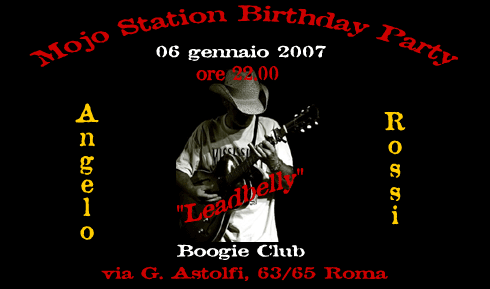
MOJO STATION BIRTHDAY PARTY with ANGELO "LEADBELLY" ROSSI - 06/01/2007
Mojo Station Cultural Association presents:
Saturday, January 6, 2007
Mojo Station Birthday Party
with
Angelo "Leadbelly" Rossi
at Boogie Club, Via G. Astolfi, 63/65 Rome
H 22:00 Free admission with ticket € 5.00.
Angelo "Leadbelly" Rossi (v / g) + special guest Roger Solli (d)
deep voice and intense guitar playing a "raw 'n' dirty" worthy of the best Hill Country Blues. This and much more is Angelo "Leadbelly" Rossi, bluesman-bred star of "Mojo Station Birthday Party". Rightly considered the best expression of Italian Blues, Smith presents live autographs of his latest songs "I don? T Want to take nothing with me when i? M gone", album that had critics of the awards is that the public. Sound authentic and passionate, lyrical important freighted with social content, rendered in a Blues match which sees the traditional sounds of down-home with? Of hypnosis? Hill-Boogie. Do not miss!
"The Italian blues clears the past and begins a new era?
leaves me breathless every time I listen to?"
( The Blues )
"Eleven tracks thick as tar, powerful, dirty, your excellency?" I don? T Want to take nothing with me when i? M Gone "is one of the surprises of the Year ..."
( The Buscadero )
And Nothin 'But The Blues ...
Mojo Station Cultural Association presents:
Saturday, January 6, 2007
Mojo Station Birthday Party
with
Angelo "Leadbelly" Rossi
at Boogie Club, Via G. Astolfi, 63/65 Rome
H 22:00 Free admission with ticket € 5.00.
Angelo "Leadbelly" Rossi (v / g) + special guest Roger Solli (d)
deep voice and intense guitar playing a "raw 'n' dirty" worthy of the best Hill Country Blues. This and much more is Angelo "Leadbelly" Rossi, bluesman-bred star of "Mojo Station Birthday Party". Rightly considered the best expression of Italian Blues, Smith presents live autographs of his latest songs "I don? T Want to take nothing with me when i? M gone", album that had critics of the awards is that the public. Sound authentic and passionate, lyrical important freighted with social content, rendered in a Blues match which sees the traditional sounds of down-home with? Of hypnosis? Hill-Boogie. Do not miss!
"The Italian blues clears the past and begins a new era?
leaves me breathless every time I listen to?"
( The Blues )
"Eleven tracks thick as tar, powerful, dirty, your excellency?" I don? T Want to take nothing with me when i? M Gone "is one of the surprises of the Year ..."
( The Buscadero )
And Nothin 'But The Blues ...
Hideo Wakamatsu Bag Locked
MOJO STATION BIRTHDAY PARTY with ANGELO "LEADBELLY" ROSSI - 06/01/2007
L? Mojo Station Cultural Association presents:
Saturday, January 6, 2007
Mojo Station Birthday Party
with ANGEL? Leadbelly? At ROSSI
Boogie Club
Via G. Astolfi, 63/65? Rome
H 22:00 Free admission with pass? 5.00
---------------------------------------------- --------------------------------------------------
L? cultural association? Mojo Station? comes from? experience of the same name broadcast? Mojo Station? The Blues and its Cultures, now in its fifth season of programming, which airs every Wednesday from 21 to 24 on Radio Città Aperta, 88.9 FM Roma and Lazio. Purpose of? Association is the promotion of African-American culture, black music, especially blues music. In order to achieve this end it organizes regular public events such as concerts, exhibitions and debates.
------------------------------------------------- -----------------------------------------------
E? the? Boogie Club?, new point of reference for the blues scene in Rome, to receive the? Mojo Station Birthday Party? on 06 January 2007. A big party organized by Ass Cult. Mojo Station to celebrate along with listeners and listeners of the historic radio broadcast? Mojo Station? The Blues and its cultures? (RSO 88.9 FM), the first five years of operation. The highlight of the evening will be the live-set, from 22:00 h, Angelo? Leadbelly? Rossi. An event at? Teaches Blues sound more pure and authentic. Everywhere!
Saturday, January 6, 2007
Mojo Station Birthday Party
with ANGEL? Leadbelly? At ROSSI
Boogie Club
Via G. Astolfi, 63/65? Rome
H 22:00 Free admission with pass? 5.00
---------------------------------------------- --------------------------------------------------
L? cultural association? Mojo Station? comes from? experience of the same name broadcast? Mojo Station? The Blues and its Cultures, now in its fifth season of programming, which airs every Wednesday from 21 to 24 on Radio Città Aperta, 88.9 FM Roma and Lazio. Purpose of? Association is the promotion of African-American culture, black music, especially blues music. In order to achieve this end it organizes regular public events such as concerts, exhibitions and debates.
------------------------------------------------- -----------------------------------------------
E? the? Boogie Club?, new point of reference for the blues scene in Rome, to receive the? Mojo Station Birthday Party? on 06 January 2007. A big party organized by Ass Cult. Mojo Station to celebrate along with listeners and listeners of the historic radio broadcast? Mojo Station? The Blues and its cultures? (RSO 88.9 FM), the first five years of operation. The highlight of the evening will be the live-set, from 22:00 h, Angelo? Leadbelly? Rossi. An event at? Teaches Blues sound more pure and authentic. Everywhere!
And Nothin 'But The Blues ...
Subscribe to:
Posts (Atom)